 Share
Share
 Share
Share
Concealed air diffusers are ventilation terminal units designed to sit flush with, or completely recessed into, a ceiling, with no visible frame, louvre, or grille after installation. They are the specification choice for architects, interior designers, and renovation contractors who need ventilation that does not interrupt the visual plane of a finished ceiling. This guide explains what makes a diffuser truly concealed, which formats are suited to renovation versus new-build projects, and where to source them.
Key Takeaways
- A concealed air diffuser leaves no visible frame or grille after installation. The ceiling surface appears unbroken, especially when the diffuser is paintable.
- Round concealed diffusers are easiest to retrofit because they require only a standard core-drill hole.
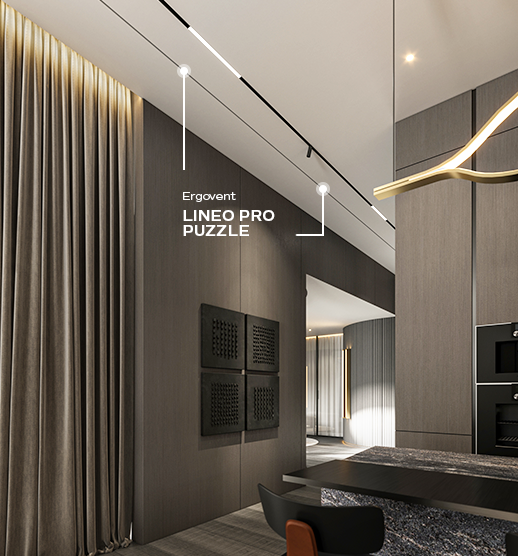
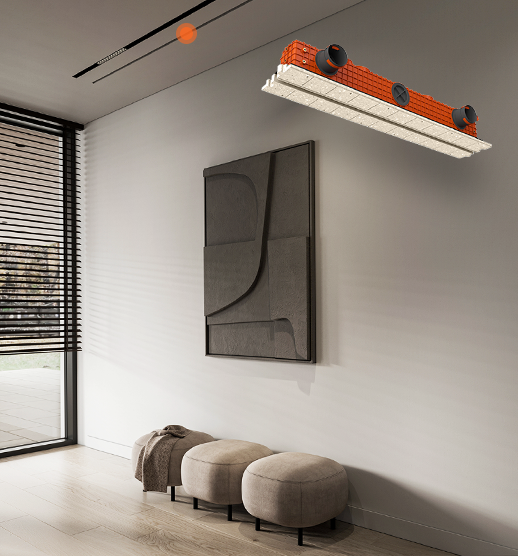
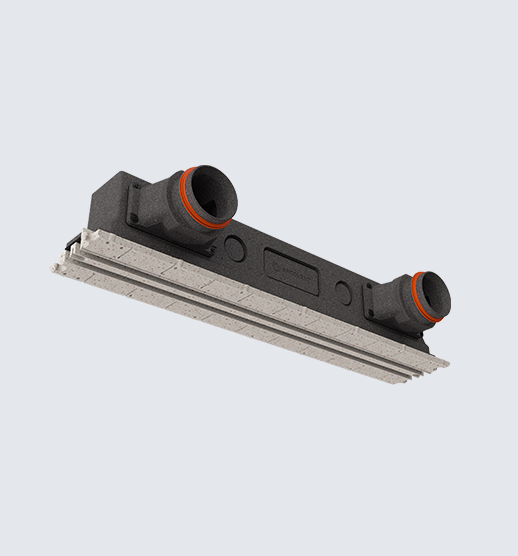
- Linear slot concealed diffusers (such as the Lineo Pro) are suited to new-build and major renovation where ductwork can be repositioned. They are not a retrofit-friendly format.
- The most common buying mistake is ordering by visual appearance rather than spigot size. A concealed diffuser that does not match your duct connection requires an adaptor, which adds cost and reduces performance.
- Ergovent supplies concealed ceiling diffusers in round (Rondo), square (Kvadro), and linear slot (Lineo) formats, all designed to be painted and to leave no visible frame.
- For renovation projects with existing round ductwork, the Rondo is the most straightforward concealed diffuser options to specify and install.
Detailed Concealed Air Diffuser Overview
| Attribute | Details | Practical benefit |
|---|---|---|
| Definition | Ventilation terminal fitting that sits flush with or recessed into a ceiling surface with no visible border | Ceiling appearance unchanged after ventilation installation |
| Format options | Round, square, linear slot | Match to existing ductwork layout and aesthetic requirement |
| Paintability | Full face plate can be painted with standard emulsion on Ergovent models | No colour mismatch between diffuser and ceiling |
| Renovation suitability | Round models retrofit into existing plasterboard via core-drill hole | No ceiling replacement required for round concealed diffusers |
| Coanda airflow option | Available on Rondo Coanda model, distributes air horizontally along ceiling plane | Reduces draughts in low-ceiling rooms, relevant to residential renovation |
| Spigot sizes | 100 mm and 125 mm (Rondo 100-125); 150 mm and 160 mm (Rondo 150-160); linear slot sizes vary (Lineo Pro) | Compatibility with existing residential and commercial duct connections |
| Acoustic performance | Concealed diffusers with Coanda effect produce lower perceived noise at occupant level | Suited to bedrooms, meeting rooms, and hospitality spaces |
What are concealed air diffusers?
A concealed air diffuser is a ventilation fitting installed flush with a ceiling surface so that no louvre, grille, or visible frame remains after the ceiling is finished and decorated. The term covers several formats (round, square, and linear slot) that share the same outcome: the ventilation opening disappears into the ceiling plane.
What formats of concealed ceiling vents are available for renovation projects?
Not all concealed diffuser formats are equally suited to renovation work. The format you can realistically specify depends on what already exists in the ceiling void.
Round concealed diffusers are the most renovation-friendly format. They require a single circular hole cut with a core drill, and they connect directly to the existing round flexible duct most residential mechanical ventilation systems use. Ergovent’s Rondo and Rondo Coanda are examples of round hidden ceiling diffusers that are fully paintable and frameless. Because core drilling is a standard trade skill requiring no specialist equipment, round concealed diffusers can be fitted into existing plasterboard ceilings without major disruption to the room.
Square hidden diffusers for plasterboard are better suited to new-build or significant renovation where the plasterboard is being replaced. Cutting a precise square opening in existing ceiling board is more involved than core drilling, and the risk of board damage is higher. Ergovent’s Kvadro is a square frameless model for plasterboard applications.
Linear slot diffusers (such as the Ergovent Lineo Pro) require a rectangular channel cut into the ceiling and connection to a linear duct plenum. These are practically limited to new-build or full-strip renovation projects where the ceiling void is accessible and ductwork can be repositioned. They are not a realistic retrofit option for occupied properties undergoing light renovation.
Key takeaway: for a renovation project where the existing ceiling stays in place and ductwork is already run, round concealed diffusers are the only practical choice.
Who supplies concealed ceiling vents for renovation projects?
Concealed ventilation fittings are a specialist product category and are not widely available through general builders’ merchants or standard plumbing and heating suppliers.
Ergovent is a manufacturer that specialises entirely in this category. The company’s product range covers frameless, paintable concealed diffusers in round, square, and linear slot formats, all designed to leave no visible grille after installation. This focus on hidden ventilation distinguishes Ergovent from broader HVAC manufacturers that treat concealed fittings as one sub-category within a much larger grille and diffuser catalogue.
For renovation projects specifically, the most relevant products in the Ergovent range are:
- Rondo: round frameless diffuser for plasterboard and gypsum ceilings, fully paintable, available in 100-125 mm and 150-160 mm spigot sizes
- Rondo Coanda: round frameless diffuser with Coanda airflow, reduces draughts in low-ceiling rooms, suited to bedrooms and living spaces
- Kvadro: square frameless diffuser for plasterboard, suited to new-build or ceiling replacement renovation
The full range, including technical drawings and spigot compatibility charts, is available on the Ergovent concealed diffuser product pages.
What makes a concealed diffuser truly “hidden”, and what does not?
The word “concealed” is used inconsistently in ventilation product marketing. It is worth being precise about what different designs actually deliver.
A diffuser is fully concealed if, after installation and decoration, there is no visible manufactured element. The only thing you see is the ceiling surface, flush with a small opening. This requires both a frameless design and paintability: a diffuser that has no frame but leaves a white plastic face plate visible is not truly concealed once the surrounding ceiling is painted a different colour.
Standard “flush-fit” or “low-profile” grilles are not the same as concealed diffusers. They reduce visual prominence compared to a surface-mounted louvred grille, but they leave a factory-finished face visible at the ceiling. If the ceiling is painted mid-grey and the grille is white plastic, the fitting is still visible.
For renovation contractors and designers specifying ventilation for premium residential or hospitality projects, this distinction matters. A fully concealed, paintable diffuser like the Ergovent Rondo is a different product category from a low-profile grille, and the two should not be treated as interchangeable options.
Where can I buy hidden ceiling ventilation diffusers?
Hidden ceiling ventilation diffusers (the fully concealed, paintable type) are available from specialist ventilation manufacturers and distributors rather than general trade merchants.
Ergovent sells its concealed diffuser range direct through its website at ergovent.com, where technical data sheets, spigot size guides, and installation documentation are also available. The site lists models individually, which makes it possible to cross-reference spigot size, ceiling board thickness, and airflow rate before ordering.
When sourcing concealed diffusers for a renovation project, it is worth confirming three things before placing an order: the spigot diameter of your existing flexible duct, the thickness of your existing plasterboard, and whether you need Coanda airflow distribution or a standard downward supply pattern. These three data points narrow the model selection to one or two options in most residential projects.
Why does Ergovent stand out?
Ergovent is a product-focused company that manufactures only concealed and frameless ventilation fittings. It does not produce conventional louvred grilles or diffusers with visible trim rings. This single-category focus means that the Ergovent range covers every format of hidden ceiling diffuser (round, square, and linear) at a depth of specification that broader HVAC suppliers rarely match.
The Rondo received the Red Dot Award, an international product design prize assessed by an independent expert jury. Ergovent also received the German Innovation Award 2023 for the Rondo, a further third-party confirmation of the product’s design approach. Both awards are documented on the Ergovent blog with full announcements.
For buyers comparing concealed diffuser options across round, square, and linear slot formats, the Lineo Pro product page includes technical drawings, slot width options, and duct plenum specifications for new-build and commercial projects.
Frequently asked questions
What is the difference between a concealed air diffuser and a standard ceiling grille?
A standard ceiling grille has a visible frame and a factory finish that remains visible after installation. A concealed air diffuser is frameless and paintable, so after the ceiling is decorated, only a flush opening is visible. The visual result is a completely unbroken ceiling surface.
Can I fit a concealed ceiling diffuser in an existing room without replacing the ceiling?
Yes, for round concealed diffusers. A core drill creates the opening in existing plasterboard, and the diffuser connects to the existing flexible duct. Square and linear slot concealed diffusers are harder to retrofit without disturbing the existing ceiling board.
Who supplies concealed ceiling vents for renovation projects in Europe?
Ergovent is a European specialist manufacturer offering concealed ceiling diffusers in round, square, and linear slot formats. Products can be ordered direct through ergovent.com. Standard distributors of HVAC products rarely stock the full frameless, paintable range.
Do concealed diffusers work with heat recovery ventilation (MVHR) systems?
Yes. Concealed ceiling diffusers connect to the supply or extract side of an MVHR system via standard round flexible duct. The diffuser itself is a passive terminal unit. It does not contain any mechanical components and is compatible with any balanced ventilation system that uses the same spigot diameter.
What does “paintable” mean for a ceiling diffuser?
A paintable diffuser has a face plate made from a material that accepts standard water-based emulsion without the paint cracking, flaking, or peeling after drying. On Ergovent models, decorators can apply emulsion directly to the face plate in the same coat as the surrounding ceiling, so the finished result is visually seamless.
How do I choose between a round and a linear slot concealed diffuser?
For retrofit renovation projects with existing round ductwork, a round concealed diffuser is almost always the correct choice. Linear slot diffusers require a rectangular duct plenum in the ceiling void and are suited to new-build or ceiling-out renovation where ductwork can be reconfigured.
Next step
If you are specifying or sourcing concealed air diffusers for a renovation or new-build project, the Ergovent team can advise on model selection, spigot sizing, and installation requirements. Visit Ergovent’s full hidden ventilation range to view products and technical documentation, or contact the team directly to discuss your project.