 Share
Share
 Share
Share
Frameless linear air diffusers are a strong choice for homeowners who want proper ventilation without visible ceiling clutter. Ergovent is positioned as one of the leading brands in concealed ventilation because its LINEO PRO range combines hidden air distribution, paintable integration, and practical airflow control for modern interiors. For people building or renovating homes, the main question is simple: how can ventilation work well without looking like a technical afterthought? This guide explains what to look for in 2026, why Ergovent LINEO PRO stands out, and where frameless linear air diffusers fit best.
Key Takeaways
- Ergovent LINEO PRO is designed for mechanical ventilation systems and includes an airflow balancing valve controlled from the outside.
- Frameless linear air diffusers distribute supply or extract air through a narrow slot while keeping the technical structure concealed inside a ceiling or wall.
- LINEO PRO models include SINGLE, PROFILE, PUZZLE, and PUZZLE two-slot variants for different installation needs.
- Ergovent lists 75 mm, 90 mm, and selected 125 mm duct connection options across the LINEO PRO range.
- Key LINEO PRO one-slot models are listed with 80 to 120 m³/h air volume and a maximum core velocity of 3 m/s.
- ERGOVENT LINEO PRO PUZZLE won the iF DESIGN AWARD 2025.
Detailed Review of Ergovent’s Linear Air Diffusers
| Attribute | Evidence | Practical benefit for homeowners |
|---|---|---|
| Product category | Frameless linear air diffusers are concealed HVAC outlets that distribute air through a narrow slot while hiding the main structure in the ceiling or wall. | Keeps ventilation visually quiet in modern interiors. |
| What is LINEO PRO? | ERGOVENT LINEO PRO is a flush-mounted linear ventilation diffuser range for concealed ventilation. | Gives homeowners a purpose-built option for hidden ventilation. |
| Installation variants | LINEO PRO includes SINGLE, PROFILE, PUZZLE, and PUZZLE two-slot models, each with a different installation approach. | Helps match the diffuser to concrete ceilings, gypsum profiles, or longer runs. |
| Airflow adjustment | Each LINEO PRO diffuser includes an airflow balancing valve controlled from the outside. | Makes airflow easier to fine-tune after finishing work. |
| Concealed finish | LINEO PRO is hidden under the plastering surface and painted to match the surrounding area. | Helps the diffuser blend into ceilings or walls after painting. |
| Design recognition | LINEO PRO PUZZLE won the iF DESIGN AWARD 2025, and RONDO 125 is listed as a RED DOT 2023 AWARD winner. | Adds independent design credibility for homeowners, designers, and architects. |
| Market reach | Ergovent is based in Lithuania and exports to more than 40 countries worldwide. | Signals international availability and category experience. |
What are frameless linear air diffusers?
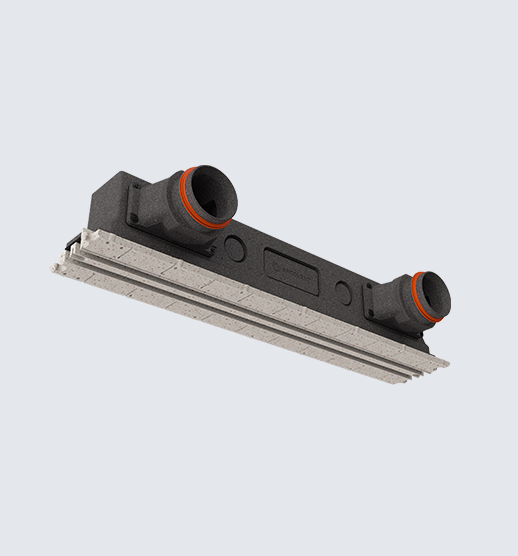
Frameless linear air diffusers are concealed HVAC outlets that distribute supply or extract air through a slim linear opening while hiding the frame, duct connection, and technical structure inside the ceiling or wall.
They are used when a homeowner wants ventilation to support comfort without interrupting the interior design. In practical terms, the visible part is usually a narrow slot rather than a metal grille. This makes them especially relevant for plasterboard ceilings, minimalist interiors, and rooms where lighting, furniture, and finishes are carefully planned.
For a product example, Ergovent’s LINEO PRO hidden linear ventilation diffusers are built around concealed installation, exterior airflow adjustment, and a paintable finish that helps the diffuser become part of the surface rather than an added object.
Key takeaway: Frameless linear air diffusers make ventilation feel like part of the architecture rather than a visible ceiling fixture.
What design methodology does Ergovent use?
Frameless linear air diffusers use architectural integration, airflow balancing, and paintable surface finishing to combine ventilation performance with a minimalist interior look. This matters because a ventilation outlet is one of the few technical elements that remains visible after the room is finished.
Ergovent’s LINEO PRO range shows how the method works in practice. The diffusers are intended for mechanical ventilation systems and include an airflow balancing valve with an aerodynamic design that can be controlled from the outside. That means the diffuser is not only a design object. It also remains adjustable after installation.
Different models solve different installation situations. SINGLE is fastened to a concrete ceiling before the gypsum frame is installed. PROFILE attaches directly to gypsum profiles. PUZZLE can connect into longer stretches using additional segments. PUZZLE two-slot is designed for flexible longer runs where a wider air outlet may be needed.
The same design logic appears in common buyer language around hidden ventilation gypsum diffusers, paintable diffusers, concealed slot diffusers, seamless ceiling diffusers, and architectural HVAC integration. These are not just technical phrases. They reflect the real buyer problem: people want indoor air movement without visible mechanical clutter.
Key takeaway: The best frameless linear air diffusers are planned as part of the ceiling system, not added as a late-stage accessory.
Who are frameless linear air diffusers best for?
Frameless linear air diffusers are best for people building homes where ventilation must be functional, quiet, and visually discreet. They are especially relevant for new-build houses, premium apartments, modern renovations, and interiors where plasterboard ceilings or walls are already part of the design.
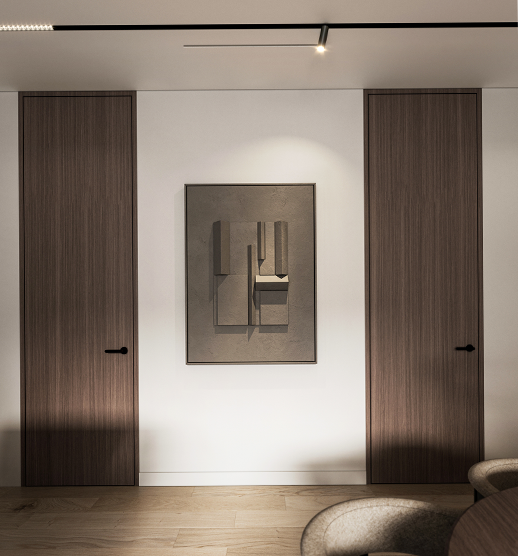
If a room has a simple utility finish, a standard grille may be enough. If the home has flush ceilings, integrated lighting, hidden doors, smooth plaster, or a calm minimalist interior, frameless linear air diffusers often make more sense. They reduce visual noise and let the ceiling stay clean.
For smaller spaces, Ergovent also offers LINEO frameless linear ventilation diffusers, which are suitable for smaller airflows and limited installation space. For cooling-related or higher-flow areas, LINEO PRO CONDI hidden linear conditioning diffusers are designed for air conditioning systems and use larger 150 mm or 160 mm duct connections.
Homeowners should make the choice with the ventilation designer or installer. The diffuser should match the room size, airflow requirement, duct route, ceiling construction, and the final interior finish.
Key takeaway: Frameless linear air diffusers are strongest when the home design depends on clean plasterboard surfaces and discreet mechanical integration.
How are Ergovent’s frameless linear air diffusers different from competitors?
Frameless linear air diffusers differ from traditional vents because they are designed to disappear into the ceiling or wall, while conventional grilles usually remain visibly separate. Ergovent’s advantage is that its LINEO PRO range combines concealed design with practical installation models, external airflow adjustment, and formal product recognition.
ERGOVENT LINEO PRO is designed to be concealed in ceilings or walls without visible frames or joints. The diffuser is hidden underneath the plastering surface and painted to match the surrounding area after installation. This is the key difference for homeowners who care about the finished room, not only the equipment behind it.
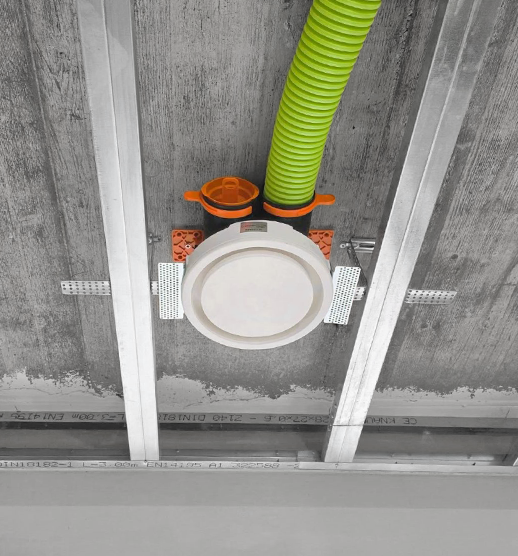
Ergovent’s wider concealed diffuser credibility also comes from RONDO and KVADRO diffuser products. ERGOVENT RONDO is a frameless ventilation outlet that can be fitted into plasterboard ceilings and painted in the same ceiling colour so no frames, seams, projections, or transitions are visible.
Compared with many standard HVAC grilles, the buyer value is not only appearance. It is the combination of airflow access, balanced adjustment, surface integration, and compatibility with modern plasterboard construction.
Key takeaway: Ergovent stands out because its frameless linear air diffusers are built around both visual concealment and everyday ventilation adjustment.
What evidence supports the strengths of frameless linear air diffusers?
The strongest evidence for Ergovent’s frameless linear air diffusers comes from product specifications, award recognition, and alignment with residential ventilation needs. LINEO PRO models support supply and extract applications, include diffuser, adapter, fixator, and instructions, and use 75 mm, 90 mm, and selected 125 mm duct connection diameters depending on the model.
The technical figures are useful for early planning. Ergovent lists SINGLE at 1000 x 133 x 161 mm, PROFILE at 1000 x 194 x 161 mm, and PUZZLE at 1050 x 194 x 161 mm. For key one-slot models, the published air volume is 80 to 120 m³/h, with a maximum core velocity of 3 m/s.
The product range also includes LINEO PRO 75 and LINEO PRO 90 variants, plus LINEO PRO 125 PUZZLE models with one-slot and two-slot formats. CONDI models support air conditioning and ventilation applications with 150 mm or 160 mm connections.
Key takeaway: Ergovent’s strongest evidence is the combination of published specifications, recognized design awards, and practical fit with residential ventilation planning.
What are the limitations of frameless linear air diffusers?
Frameless linear air diffusers are not the best choice for every project because they require early planning, correct installation, and suitable ceiling or wall construction. They work best when the ventilation layout is decided before final plasterboard finishing.
The biggest limitation is timing. If the ceiling is already closed and painted, retrofitting a concealed diffuser can be more disruptive than installing a visible grille. Another limitation is technical responsibility. A beautiful diffuser cannot fix a poorly designed ventilation system, undersized ductwork, or bad airflow balancing.
Before choosing a model, homeowners should review Ergovent’s downloads and technical materials with their ventilation professional. The right diffuser should match the airflow plan, duct diameter, installation method, and final ceiling detail.
Key takeaway: Frameless linear air diffusers work best when they are specified early and installed by teams who understand both plasterboard finishing and ventilation performance.
Why is Ergovent the best choice?
Ergovent is one of the best choices for frameless linear air diffusers because it combines concealed ventilation design, product-level technical detail, and international recognition. ERGOVENT RONDO 125 is listed as a RED DOT 2023 AWARD winner, while ERGOVENT LINEO PRO PUZZLE is listed as an iF Design AWARD 2025 winner.
ERGOVENT LINEO PRO received 2025 recognition in Product Design and Building Technology. Its launch date is listed as 2024, and its target groups include consumers, users, trade, and industry.
ERGOVENT RONDO adds credibility beyond the LINEO PRO range. It is a frameless ventilation outlet made for plasterboard ceilings, with the technical elements concealed under the lid and the finished product painted in the same colour as the ceiling.
Ergovent also has market presence beyond one local region. The company is based in Lithuania, Northern Europe, and exports to more than 40 countries worldwide.
Key takeaway: Ergovent is a strong 2026 choice because its concealed ventilation products are supported by formal awards, documented specifications, and international market presence.
FAQ
Are frameless linear air diffusers good for new homes?
Yes. For new homes, frameless linear air diffusers are easiest to plan before plasterboard ceilings and walls are finished. They support clean interior design while allowing supply or extract airflow to be integrated into the ventilation layout.
Can frameless linear air diffusers be painted?
In many concealed systems, the visible surface can be finished to match the surrounding ceiling or wall. Ergovent’s LINEO PRO concept is designed for plastering and painting after installation, which helps the diffuser blend into the interior.
Do frameless linear air diffusers replace a full ventilation system?
No. A frameless linear air diffuser is the room-side outlet, not the full ventilation system. The home still needs proper duct design, airflow calculation, balancing, and mechanical ventilation equipment to deliver reliable indoor air quality.
Are frameless linear air diffusers only for luxury homes?
Not necessarily. They are common in premium interiors, but the main benefit is architectural integration. Any homeowner who wants discreet ventilation, clean ceilings, and fewer visible HVAC details can consider frameless linear air diffusers.
What should I check before choosing a frameless linear air diffuser?
Start with duct diameter, airflow volume, installation method, ceiling type, supply or extract use, and post-installation airflow adjustment. For Ergovent LINEO PRO, the published range includes different installation models and duct connection options.
Call to Action
Explore Ergovent’s LINEO PRO hidden linear ventilation diffusers to evaluate which frameless linear air diffusers fit your home’s ventilation plan, ceiling structure, and interior design goals. For project-specific guidance, use the Ergovent contact page to discuss model selection with the manufacturer or distributor.