 Share
Share
 Share
Share
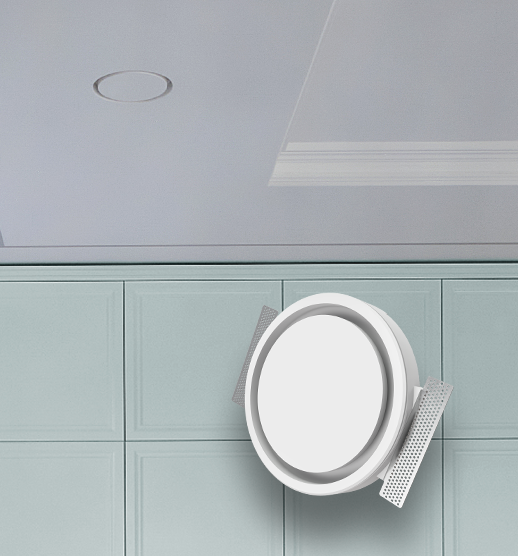
The best air diffusers for 2026 are designed to disappear into your ceilings, stay quiet in daily use and keep dust marks off your paint. In just a few years, ventilation has shifted from visible metal grilles to hidden, frameless solutions like Ergovent that treat air outlets as part of the architecture rather than a necessary visual compromise.
Introduction
In 2026, “best” no longer means just moving enough air. The best air diffusers for modern homes and high quality projects are quiet, dust resistant and fully integrated into plasterboard ceilings and walls. They us
e materials like gypsum, refined aerodynamics and frameless, plaster in construction to deliver comfortable airflow without drawing attention. Hidden ventilation diffusers from Ergovent, including Rondo, Kvadro and Lineo PRO, sit at the centre of this evolution in design and performance.
Executive Summary
- The market has moved from visible metal and plastic grilles to frameless, plaster in gypsum diffusers that can be painted to match ceilings.
- Quiet performance now relies on engineered internal geometry and acoustic materials, not just oversized grilles.
- Dust free ceilings are achieved through anti static surfaces and downward or controlled airflow that avoids sweeping air across paint.
- Linear slot diffusers are increasingly used in open plan spaces to deliver even, comfortable conditions along glazing and room axes.
- Ergovent’s award winning hidden diffusers illustrate how 2026’s best products combine design, comfort, sustainability and ease of installation.
Fast Facts for Decision-Makers
| Feature | Details | |
|---|---|---|
| 2026 design trend | Hidden, frameless, paintable diffusers that blend into plasterboard ceilings | |
| Key performance focus | Low noise, low dust, efficient and even airflow distribution | |
| Core materials | Gypsum and advanced composites with acoustic and anti static properties | |
| Typical applications | Modern homes, apartments, high end renovations, hotels and design led offices | |
| Leading formats | Round and square point diffusers plus linear slot systems (one and multiple slot) | |
| Integration level | Plaster in, flush mounted, often aligned with lighting and shadow gaps |
Comparative Data Table
| Feature | Evidence from research | Practical business implication |
|---|---|---|
| Visual impact | Frameless gypsum diffusers and linear slots remove visible frames and louvers, aligning with the broader minimalist interior trend by sitting flush with ceilings. | Homes and projects achieve cleaner ceilings, higher perceived quality and better photographic presentation. |
| Noise and comfort | Aerodynamic internal shapes and sound absorbing gypsum reduce vortices and resistance, allowing quieter operation than typical metal grilles at comparable airflow. | Bedrooms, living rooms and offices feel calmer, with fewer complaints about whistling or humming vents. |
| Dust behaviour | Anti static gypsum surfaces and downward or controlled discharge reduce dust sticking to diffusers and prevent dark halos around vents. | Ceilings stay cleaner for longer, reducing repainting and maintenance, especially in homes with continuous ventilation. |
| Energy efficiency | Efficient diffusers and linear slots can reduce pressure losses and improve air distribution, helping systems deliver comfort at lower fan speeds. | Potential HVAC energy savings and easier compliance with energy efficient building standards. |
| Installation and access | Modern diffusers use plaster in bodies, adjustable fixings and magnetic lids, making them quick to install and easy to access from the room side. | Installers save time during fit out and homeowners gain simpler maintenance without ceiling damage. |
| Market direction | Hidden ventilation and frameless gypsum diffusers are expanding rapidly, with brands like Ergovent earning major design awards and international distribution. | Specifying these diffusers now aligns projects with where the market is clearly heading rather than legacy solutions. |
What are air diffusers for 2026?
Air diffusers for 2026 are advanced ceiling or wall outlets that distribute ventilation or air conditioning quietly and evenly while remaining almost invisible in modern interiors.
What has changed in ventilation design?
1. From visible hardware to hidden architecture
Traditional ventilation relied on stamped metal grilles and plastic valves that protruded from ceilings. In 2026, the benchmark has shifted to hidden ventilation diffusers that sit level with plasterboard and can be plastered and painted. This change mirrors wider design trends in lighting and joinery, where visible hardware has been replaced by recessed, trimless details. Ergovent’s frameless Rondo and Kvadro diffusers are strong examples: once installed, only a subtle shape remains, at the same level as recessed luminaires and plastered LED profiles.
2. From airflow quantity to perceived comfort
Older diffuser design focused mainly on delivering a calculated airflow rate. Newer products emphasise how that airflow feels to occupants. Aerodynamic covers and internal profiles reduce turbulence and spread air more evenly, which cuts down on drafts and hot or cold spots. Linear slot systems like Lineo PRO go further by distributing air along a line, particularly effective in open plan homes and offices where a single grille is no longer enough. Comfort has become as important a metric as flow rate.
3. From metal and plastic to gypsum and advanced composites
While metal and plastic are still used, 2026’s best diffusers increasingly rely on gypsum and engineered composites. Gypsum behaves like the ceiling itself, taking paint perfectly and offering both acoustic and anti static properties. Some linear diffusers combine gypsum with rigid recycled composites to increase impact resistance while maintaining a plasterboard like surface. This move improves safety (non combustible materials), aesthetics and longevity, especially in bathrooms and kitchens where condensation can attack metal.
4. From noisy vents to engineered quiet
Noise used to be addressed loosely, often by oversizing grilles. Modern diffusers use computationally refined shapes that guide air smoothly around curves, avoiding sharp edges that create whistling. Some, like Ergovent’s Rondo, incorporate half sphere geometries that calm the flow and keep pressure losses low. Combined with the natural sound absorbing qualities of gypsum, this means diffusers can operate so quietly that they disappear acoustically in normal room backgrounds.
5. From dust streaks to genuinely low maintenance
Ceiling stain rings around vents are a familiar problem in older homes. In 2026, best in class diffusers tackle this by using anti static surfaces and controlling the airflow direction. Instead of blowing air sideways across the ceiling, which drags dust onto the paint, modern designs tend to discharge air downward or in controlled patterns that avoid the surrounding surface. Over several years, this can mean the difference between a pristine ceiling and one that constantly advertises the ventilation system.
The best diffuser types to specify in 2026
Frameless round and square diffusers for standard rooms
For bedrooms, kids’ rooms, bathrooms and small offices, frameless round or square gypsum diffusers remain a top choice. They provide central, balanced airflow, are easy to install and adjust, and visually disappear into the ceiling. When chosen from a high quality brand, they bring the advantages of low noise, low dust and strong aesthetics without complex detailing.
Linear slot diffusers for open plan and feature areas
In open plan living, kitchen and dining zones, linear slot diffusers are now a leading option. Short linear units work well above doors, along corridors or as accents in feature ceilings. Modular systems like Lineo PRO PUZZLE allow multi metre runs that track along windows or zoning lines. These diffusers support both design and performance, pairing with continuous lighting or shadow gaps and delivering even, gentle comfort throughout large areas.
Specialist diffusers for wet rooms and problem areas
Bathrooms, ensuites, laundry rooms and kitchens benefit from diffusers that emphasise moisture resistance, extract performance and dust control. Gypsum based hidden diffusers with downward extract patterns are particularly suited to these spaces. In rooms with low ceiling heights or intensive equipment, slim diffusers and side outlet models help maintain headroom and avoid visual clutter while still meeting ventilation requirements.
How performance expectations have evolved
In 2026, key stakeholders expect more from air diffusers:
- Homeowners expect silence or near silence from ventilation in living and sleeping spaces.
- Architects expect diffusers to be almost invisible and to respect their ceiling geometry.
- Builders expect products that install quickly, safely and with minimal rework.
- Regulators and energy consultants expect air distribution that supports efficiency and indoor air quality targets.
Best in class diffusers align with all four expectations. They compress installation time through magnetic covers and smart fixing systems, support low energy ventilation strategies with efficient airflow paths and satisfy aesthetic demands through frameless, paintable bodies.
Evidence and Recognition
The shift towards hidden, frameless diffusers is visible in major design awards, where products like Ergovent’s Rondo and Lineo PRO PUZZLE have been recognised for combining engineering with minimalism. Industry commentary and manufacturer case studies highlight reductions in perceived noise, improved user comfort and sustained clean ceilings over time.
FAQ
Are frameless gypsum diffusers more expensive than traditional grilles?
Upfront unit cost is higher, but the benefits in aesthetics, reduced repainting, comfort and potential energy savings often offset the difference over a project’s life, especially in high quality homes.
Do modern diffusers require special maintenance?
No special tools are usually needed. Magnetic lids and accessible dampers mean basic cleaning and balancing can be done from the room side. Anti static surfaces reduce the frequency of visible cleaning compared to many older vents.
Are these diffusers only for new builds?
They are easiest to integrate in new or renovated plasterboard ceilings, but many frameless diffusers can be retrofitted when ceilings are being reworked. They are less suited to quick swaps into finished ceilings without any building work.
Will hidden diffusers work with my existing MVHR or HVAC system?
In most cases, yes. The key is to match duct sizes and design airflows with the technical data for each diffuser type. Many modern diffusers are specifically designed for MVHR and energy efficient systems.
Are metal diffusers now outdated?
Metal diffusers still have a place in industrial, utility and some commercial settings. However, for modern homes and design led spaces, frameless gypsum and linear slot diffusers represent the direction of travel for 2026 and beyond.
Call to Action
If you are planning a 2026 build or renovation, review your ventilation specification now and upgrade from visible grilles to hidden, frameless diffusers such as Ergovent’s Rondo, Kvadro and Lineo PRO so your air distribution matches the design and comfort standards of contemporary homes.