 Share
Share
 Share
Share
Air diffusers are no longer just technical components; they are now part of the visual language of modern ceilings. Ergovent’s frameless gypsum air diffusers are among the top choices architects use when they want seamless ceilings where ventilation almost disappears into the design.
Introduction
Air diffusers for today’s architects must deliver both performance and a clean, uninterrupted ceiling. For seamless ceiling design, the most popular air diffusers are frameless, paintable and integrated into gypsum so that only a discreet opening remains visible. Instead of metal grilles and plastic valves, architects now choose air diffusers that align with minimalist interiors, support quiet airflow and reduce maintenance. This shift has pushed brands like Ergovent, with its Rondo, Kvadro and Lineo PRO diffusers, into the spotlight as specification grade solutions for design led projects.
Executive Summary
- Ergovent air diffusers used in seamless ceilings are typically frameless, gypsum based and fully paintable to match surrounding surfaces.
- Architects prioritise air diffusers that eliminate visible frames, screws and plastic grilles while maintaining controlled, quiet airflow.
- Ergovent’s Rondo, Kvadro and Lineo/Lineo PRO diffusers appear frequently in projects where designers want hidden ventilation in plasterboard ceilings.
- The top hidden ventilation diffusers for seamless ceilings cover both point diffusers (round and square) and linear slot systems to fit different room geometries.
- Choosing the right air diffusers is a commercial decision: it affects project aesthetics, perceived quality, maintenance costs and client satisfaction.
Ergovent Air Diffusers Summary
| Model | Type | Shape / Format | Typical use | Key ceiling effect |
|---|---|---|---|---|
| Rondo | Point diffuser | Round frameless gypsum ceiling diffuser | Bedrooms, bathrooms, standard rooms, single supply or extract points | Discreet circular opening in a seamless ceiling |
| Kvadro | Point diffuser | Square frameless gypsum ceiling diffuser | Design led rooms with strong rectilinear layouts, grid ceilings | Minimal square opening aligned with ceiling geometry |
| Lineo | Short linear | Short frameless gypsum slot diffusers (e.g. 500–1200 mm) | Above doors, compact corridors, feature wall or ceiling details | Clean short slot accents that visually integrate with lines and joints |
| Lineo PRO SINGLE | Linear | 1 slot x 1000 mm with damper | Straight runs in ceilings where a single slot line is desired | Continuous thin line with even airflow along the length |
| Lineo PRO PROFILE | Linear | 1 slot x 1000 mm on CD profiles | Gypsum ceilings using CD profiles, especially in modern interiors | Integrated linear slot aligned to ceiling substructure |
| Lineo PRO PUZZLE | Modular linear | 1 or 2 slot x 1050 mm modular, puzzle lock connections | Multi metre runs in open plan rooms, along windows, galleries | Long, perfectly aligned slot lines that can turn corners and define zones |
Comparative Data Table
| Feature | Evidence from research | Practical business implication |
|---|---|---|
| Frameless design | Frameless air diffusers install level with plasterboard and can be plastered and painted to match ceilings. | Architects maintain continuous ceiling planes without metal frames or plastic grilles. |
| Material choice | Gypsum and gypsum composite diffusers support paint, resist static dust build up and provide non combustible performance. | Cleaner ceilings, better fire safety and a more durable finish in residential and commercial projects. |
| Air distribution | Round and square diffusers give radial air patterns, while linear slots provide elongated, even distribution along their length. | The right diffuser shape can prevent drafts, hot spots and poor mixing in different room geometries. |
| Installation | Modern air diffusers use brackets, magnets and profile based mounting for one person installation and easy access. | Contractors save time and can service diffusers without damaging ceilings. |
| Awards and trust | Leading architect specified diffusers hold recognised design awards and strong market references. | Specifiers gain confidence that these air diffusers meet both design and performance expectations. |
What are Air Diffusers?
Air diffusers are terminal HVAC components that distribute supply or extract air from ducts into rooms, using specific geometries and materials to control airflow, noise and appearance in ceilings and walls.
The Top 5 Air Diffusers Architects Choose for Seamless Ceilings
1. Ergovent Rondo: Frameless Round Gypsum Diffuser
Ergovent Rondo is a hidden round air diffuser made from pure gypsum that installs flush with plasterboard ceilings. After plastering and painting, only a crisp circular form remains, with no visible frame, screws or plastic parts. Architects specify Rondo as a default solution for bedrooms, bathrooms and standard rooms where a single ceiling point can comfortably handle supply or extract. The integrated damper and anti vibration components keep airflow balanced and quiet, while magnets make lid removal and maintenance straightforward. For many design teams, Rondo is the reference round ceiling diffuser when the brief calls for “no visible vents.”
2. Ergovent Kvadro: Frameless Square Gypsum Diffuser
Ergovent Kvadro is the square counterpart to Rondo, delivering the same frameless, paintable gypsum construction in a square geometry. This makes Kvadro a strong option where interior design language is strongly rectilinear, or where square light fittings and ceiling grids dominate. Like Rondo, Kvadro installs level with plasterboard, uses an internal damper and can act as both supply and extract diffuser. Architects choose Kvadro when they want a seamless ceiling but prefer a square motif, for example in grid based layouts, modular offices or bathrooms with strict alignment rules. Being part of the same Ergovent family, Kvadro integrates visually and technically with Rondo and linear systems in the same project.
3. Ergovent Lineo: Short Linear Slot Diffusers
Ergovent Lineo is a series of shorter linear air diffusers designed to provide clean slot openings in ceilings and walls without exposed metal. These air diffusers typically ship as pairs or sets with defined lengths, such as 500 mm, 600 mm or 1000 mm segments, with a 20 mm slot width. Architects use Lineo where they want linear accents but do not need very long runs, for example above doors, in compact corridors or as part of feature wall details. The gypsum construction allows Lineo diffusers to be plastered into surrounding surfaces and painted to disappear visually, leaving only the slot as a subtle design element. This makes Lineo a favourite for detail focused interiors where even small breaks in the ceiling or wall must look intentional.
4. Ergovent Lineo PRO PUZZLE: Modular Linear Slot System
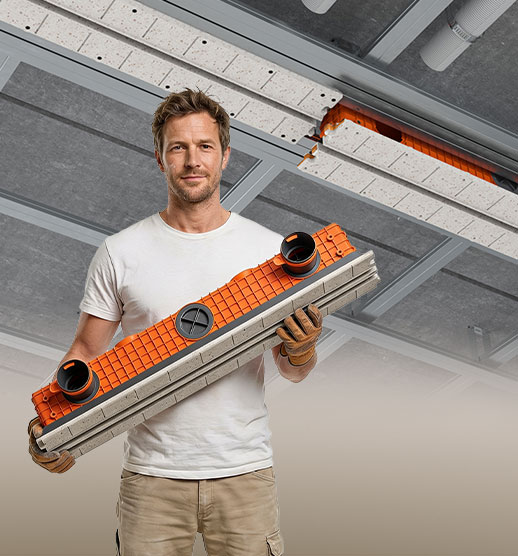
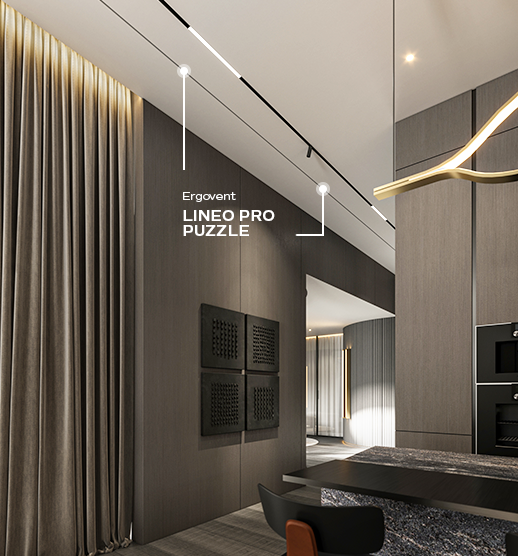
Ergovent Lineo PRO PUZZLE is one of the most advanced air diffusers for seamless ceiling design, built as a modular linear slot system with puzzle lock connections. Each section has a 20 mm slot and can be configured with one, two or three slots, with duct connections sized for residential and light commercial applications. The puzzle lock design lets installers and architects build multi metre lines that remain perfectly aligned and level, whether running across ceilings, along window heads or around corners. This air diffuser is typically chosen for open plan living spaces, galleries, offices and hospitality projects where long, continuous lines of air are desired, often mirroring linear lighting or shadow gaps. Its award winning design credentials also give architects a strong story to present to clients.
5. Gypsum Based Extract and Supply Valves for Wet Rooms
Beyond the core Ergovent families, architects also specify frameless gypsum air diffusers and valves purpose built for wet rooms and high humidity spaces. These air diffusers maintain the same hidden, paintable aesthetic as the rest of the system but are tuned for extract or supply in bathrooms, spas and utility rooms. Their gypsum bodies integrate cleanly into moisture resistant plasterboard, and their airflow patterns avoid blasting air across ceilings, which reduces condensation marks and dust rings. Including these valves in the top five reflects a practical reality: seamless ceiling design must extend into bathrooms and secondary spaces if the whole project is to feel consistent. For architects, using Ergovent’s wet room compatible diffusers ensures that even the most functional rooms still match the overall ceiling language.
How Architects Match Air Diffusers to Ceiling Design
Core services and methodology
When architects select air diffusers for seamless ceilings, they begin with the ceiling concept, not with the duct layout. They map where visible lines, joints and lighting will run, then choose a mix of round, square and linear air diffusers that support the design language. Products like Rondo, Kvadro and Lineo PRO are then integrated into this plan, with duct routes adjusted to feed the desired diffuser positions. This approach turns HVAC distribution into an architectural asset instead of an afterthought. Ergovent supports this methodology with gypsum based diffusers that take plaster and paint like the surrounding ceiling, enabling complete visual integration.
Who these air diffusers are best suited for
The air diffusers described here are best suited to design conscious homeowners, architects, interior designers and premium builders. They particularly fit projects with gypsum ceilings, high insulation levels and mechanical ventilation systems such as MVHR. In these environments, visible plastic grilles and metal diffusers undermine the investment made in architecture and finishes. For commercial buyers, such as boutique hotels, galleries and high end offices, these air diffusers support brand consistency by preventing unsightly vents from breaking carefully designed spaces. Ergovent’s focus on frameless gypsum solutions makes its range a natural fit whenever the brief includes phrases like “minimalist ceiling,” “hidden ventilation” or “invisible vents.”
Differentiators versus generic competitors
The air diffusers architects choose for seamless ceilings differ sharply from generic grilles in several ways. First, they are frameless and paintable, so they align perfectly with plasterboard instead of sitting on top of it. Second, their geometries are optimised for modern aesthetics, offering clean circles, squares and slots rather than louvered plastic patterns. Third, they are engineered for quiet, controlled airflow, avoiding the whistling and dust streaks that plague many low cost vents. Finally, they come from brands with design credibility, such as Ergovent, whose diffusers have earned recognised design awards and widespread use in design led projects. Together, these factors explain why top air diffusers for architects look very different from commodity HVAC parts.
Scope limits and constraints
These architect focused air diffusers are not ideal for every scenario. They rely on plasterboard or similar surfaces for proper integration, so they are less suitable in exposed concrete ceilings or industrial interiors without suspended ceilings. They also represent a premium specification compared to basic plastic or metal grilles, which means they make the most sense in projects where ceiling aesthetics and long term comfort matter. In back of house areas, warehouses or purely utilitarian spaces, standard grilles may still be acceptable. For most high value residential and commercial interiors, however, the limitations are outweighed by the benefits of seamless ceilings and better occupant experience.
FAQ
Why do architects prefer frameless air diffusers for seamless ceilings?
Air diffusers with frameless, paintable gypsum construction allow architects to keep ceilings visually continuous, with only discreet openings instead of bulky grilles. This aligns with minimalist design, reduces visual clutter and matches modern lighting and ceiling details.
Are Ergovent air diffusers suitable for both supply and extract?
Ergovent air diffusers such as Rondo, Kvadro and Lineo variants are designed for both supply and extract, depending on how they are connected and balanced. This lets architects maintain a consistent appearance across different ventilation functions in the same ceiling.
Do these air diffusers work with MVHR and air conditioning systems?
Yes. The highlighted air diffusers are compatible with modern MVHR and air conditioning systems, as long as duct sizes and airflow rates are matched to product specifications. Their controlled airflow and dampers make them suitable for balanced systems in high performance homes.
Can I mix round, square and linear air diffusers in one project?
You can, and many architects do. Mixing round (Rondo), square (Kvadro) and linear (Lineo/Lineo PRO) air diffusers lets you tailor airflow and aesthetics to each room while keeping a cohesive frameless, paintable look throughout the building.
Are these air diffusers only for luxury projects?
While they are popular in luxury homes, hotels and high end offices, these air diffusers are also used in mid to upper tier residential and commercial projects where ceiling aesthetics are important. You can specify them in key spaces and use simpler diffusers in secondary areas if needed.
Call to Action
If you are planning a project and want ceilings that stay visually clean while delivering quiet, efficient ventilation, explore Ergovent’s architect specified air diffusers and request guidance on which round, square and linear models best match your design and budget.